
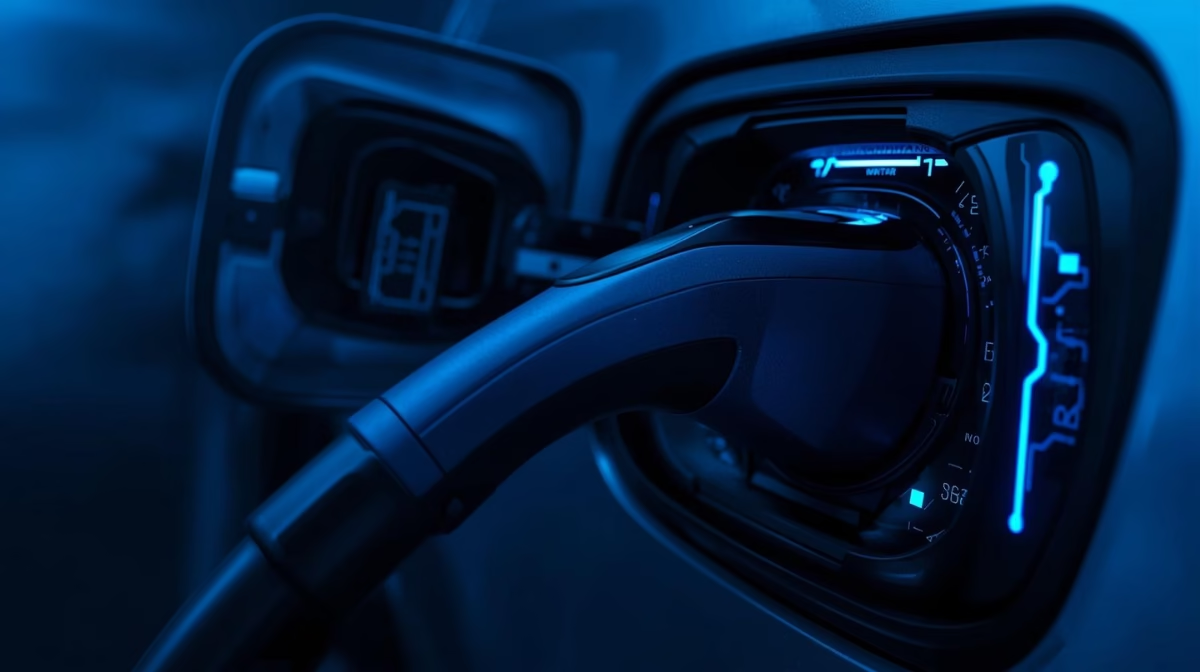
Electric vehicle adoption is accelerating, but behind every seamless charging session lies a deeply engineered ecosystem of electronics, precision manufacturing, and rigorous validation.
Production of EV chargers and controllers at Syrma SGS Technology Ltd goes beyond mere assembly. It is a well-planned combination of engineering design, process control, and scalable implementation aimed at driving the mobility transition in a reliable and safe manner.
Inside the EV Charger: Where Innovation Works Quietly
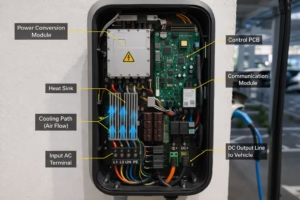
An EV charger might seem like a small box mounted on a wall or pedestal. However, the interior is a very precise power system. Hidden beneath the outer shell is a well-coordinated network of power-conversion circuits, embedded controllers, thermal systems, and communication modules that work in precise coordination.
High-voltage AC power is fed into the system and, through power modules, is converted to a controlled DC output. Within milliseconds, control boards monitor voltage, current, and temperature. Protection components safeguard the system against surges, short circuits, and unstable grid conditions. At the same time, communication interfaces allow the charger to connect to backend platforms for smart charging, load balancing, and remote diagnostics.
The fact that it operates so quietly is what truly sets this technology apart. There are no moving parts to attract attention; it is just silent efficiency. Every solder joint, PCB trace, and firmware instruction must be perfect when repeated thousands of times during charging.
This invisible accuracy is what turns simple electrical power into safe and reliable energy delivery that will silently power the future of mobility.
What Really Goes Into EV Charger and Controller Manufacturing?
Beyond the visible charging port, a network of well-orchestrated electronic components working seamlessly is hidden behind each EV charger. The charger is not just a random set of components, but a well-coordinated power and intelligence system.
The components involved are detailed as follows:
- Power Conversion Stage– This is the stage where the alternating current from the electricity grid is changed into a stable direct current that can be used by the electric vehicle. It comprises powerful semiconductors, transformers, rectifiers, and various types of filters, capable of handling voltage fluctuations without performance degradation.
- Control Board Assembly– The charger’s decision-making layer. Precision PCBs host microcontrollers, drivers, sensing circuits, and protection logic that constantly regulate current, monitor temperature, and detect faults in milliseconds.
- Embedded Firmware Integration– Hardware represents only half of the charger’s functionality. The controller firmware manages the charging algorithms, safety interlocks, and communication protocols such as OCPP.
- Thermal Management Design– Heatsinks, cooling routes, and airflow design are used to maintain consistent performance during a continuous load.
- Protection & Safety Systems– The electrical elements, such as relays, contactors, surge protection devices, and isolation mechanisms, are there for electrical safety.
- Communication Modules– LTE, Wi-Fi, Ethernet, or Bluetooth enable connection to backend systems for monitoring and billing purposes.
Manufacturing such devices requires strict process control, component traceability, proper EMI shielding, and rigorous reliability testing because in EV charging, consistency isn’t optional; it’s essential.
Where Ideas Become Hardware: The EMS Role in EV Charging
Having an experienced manufacturing arm is as essential as great design in the process of taking an EV charger from concept all the way to commercial deployment. A strategic Electronics Manufacturing Services (EMS) partner is where the crux of the solution lies.
At Syrma SGS Technology Ltd, the role extends far beyond board assembly. Engagement begins during the design validation stage to ensure every product is engineered for manufacturability, scalability, and long-term reliability. Through structured Design for Manufacturability (DFM) analysis, component lifecycle assessment, and supply chain risk mitigation, potential redesigns, delays, and cost escalations can be minimized.
EV charging hardware is a combination of power electronics, thermal management systems, embedded control architecture, and regulatory compliance that must be met. Manufacturing such complex products involves prudent quality systems, state-of-the-art product testing facilities, and a solid network of suppliers.
When engineering refinement, sourcing strategy, and manufacturing execution operate within a unified framework, Syrma SGS enables EV brands to scale seamlessly from prototype to mass production without compromising performance, safety, or time-to-market.
The Toughest Complexities in Manufacturing EV Chargers
Manufacturing EV chargers goes far beyond assembling power electronics. It requires balancing electrical safety, thermal performance, compliance mandates, and supply chain realities while meeting aggressive cost and launch timelines. The main problems of the industry that necessitate thorough engineering and process control are:
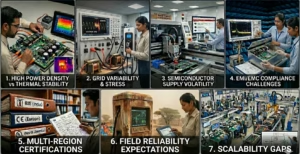
- High Power Density vs. Thermal Stability- Compact designs concentrate heat, which makes thermal management and the reliability of a device over time a very important aspect.
- Grid Variability- Voltage fluctuations, particularly in regions with unstable grid infrastructure, place significant stress on power modules and affect the performance of protection circuits.
- Semiconductor Supply Volatility- Controller ICs and power devices are faced with lifecycle risks and sourcing disruptions.
- EMI/EMC Compliance Challenges- To handle high-frequency switching, PCB layout and shielding strategies must be extremely precise.
- Multi-Region Certifications- Demonstration of compliance with BIS, CE, and UL standards requires implementation of structured documentation and traceability.
- Field Reliability Expectations- Outdoor exposure to dust, humidity, and temperature variations will lead to a decrease in product durability.
- Scalability Gaps- Practically, the scalability of processes is often revealed when changing from pilot production to mass production.
Addressing these challenges early at the concept stage can prevent expensive modifications, product recalls, and damage to the brand’s reputation.
The Controller: The Silent Brain Behind Smart Charging
The core of any EV charger is a controller, which does far more than simply switching power on and off. It can understand the condition of the grid, carry out charging algorithms, manage loads, communicate with backend systems, and even respond to a fault within milliseconds. Essentially, it is the brain that makes all the decisions in the system.
Building such a controller involves a greater level of precision than a typical PCB assembly. There are high-power components and low-voltage logic often sitting in close proximity, which is why the layout control, insulation strategy, and EMI management need to be done very carefully. Even a slight variation in soldering, component placement, or firmware flashing can cause intermittent field failures that are very hard to diagnose, especially when scaled up.
A disciplined manufacturing process is essential. The different stages, such as controlled SMT assembly, automated optical inspection, firmware validation, and traceable programming protocols, must be perfectly coordinated. Things like thermal behavior, signal quality, and component derating should all be taken into account in the production stage.
A reliable controller is not the result of design alone. It is the outcome of tightly controlled manufacturing processes that ensure every board leaving the line performs consistently, intelligently, and safely.
Testing Before Trust: Quality & Compliance in EV Charger Production
For EV charger manufacturers and OEMs, performance must go hand in hand with safety. Rigorous testing is what ultimately separates a dependable product from a potential liability.
Skipping sequential verification may save costs in the short term, but can exponentially increase risks over the long run, such as:
- Product recall due to overheating, insulation degradation, or firmware errors
- Instability of the grid resulting from poor load regulation
- Communication failures in networked charging environments
- Penalties for non-compliance with BIS, CE, or UL certifications
- Loss of a brand reputation due to public safety incidents or service interruption
EV chargers are equipped to handle the high voltages, are subject to outdoor weather, and are expected to withstand continuous charging cycles. Lack of thorough testing, such as in-circuit testing (ICT), full-load functional testing, hi-pot validation, environmental stress screening, and burn-in cycles, may result in latent defects being revealed in the field.
It’s a fact that quality has to be built into the production line, not added later through inspection.
Reliability is trust, and in such a market, testing is not merely an option but is the basis of not only the brand’s credibility but its enduring success in the market.
From 1,000 Units to 100,000: Scaling Without Breaking the System
Scaling EV charger production isn’t just about producing more units, it’s about building resilient systems that prevent cost overruns and maintain quality. Early manufacturing planning is critical to ensure processes, supply chains, and testing frameworks are aligned before volumes grow.
Small inefficiencies in pilot runs – manual assembly, incomplete documentation, or limited testing can become huge problems when scaled to tens of thousands of units, resulting in delays, higher costs, or product failures. Planning, which later translates into process standardization, automation integration, and good component sourcing, helps production to be consistent and compliant.
An experienced EMS partner like Syrma SGS Technology Ltd understands scaling challenges and proactively designs solutions into the production workflow. By eliminating bottlenecks at an early stage, manufacturers can scale confidently while delivering high-quality chargers at volume without straining systems or budgets, making growth controlled, predictable, and profitable.
Why Choosing the Right EV Charger Manufacturing Partner is Crucial?
As EV adoption increases, hardware reliability becomes critical, which directly correlates with brand trust and great user experience. Choosing the right manufacturing partner will thus help you get the charging solutions right for longevity.
Key Considerations:
- Engineering Expertise: Partner with EMS providers who understand high-power electronics, controller integration, and thermal management.
- Quality Assurance: Rigorous testing protocols, compliance with BIS, CE, and UL standards, and traceable processes prevent recalls and operational failures.
- Supply Chain Resilience: Reliable sourcing and component lifecycle management safeguard against shortages and delays.
- Scalability: Experienced partners can transition from pilot batches to mass production without compromising performance.
- Collaborative Approach: Early involvement in design-for-manufacture (DFM) and prototyping ensures production feasibility and cost efficiency.
In fact, selecting an EV charger manufacturer is a strategic decision that goes beyond mere outsourcing; it will help you protect your brand, accelerate time-to-market, and build customer confidence.
The Road Ahead: Smarter, Faster, and More Efficient Charging
The future of EV charging is accelerating toward smarter, faster, and more efficient solutions. Next-generation chargers will integrate advanced power electronics, AI-driven load management, and seamless grid connectivity, enabling higher speeds without compromising safety or reliability. Controllers will evolve to optimize energy distribution, support predictive maintenance, and enhance user experience.
For EV brands, partnering with an experienced EMS provider like Syrma SGS Technology Ltd ensures these innovations scale flawlessly, from pilot builds to mass production. As the mobility ecosystem grows, disciplined manufacturing will remain the quiet engine powering every successful charging session.
Disclaimer: Images used in this Blog are AI generated


