How Solar Tech Evolved Into Next Gen High-Performance Panels?
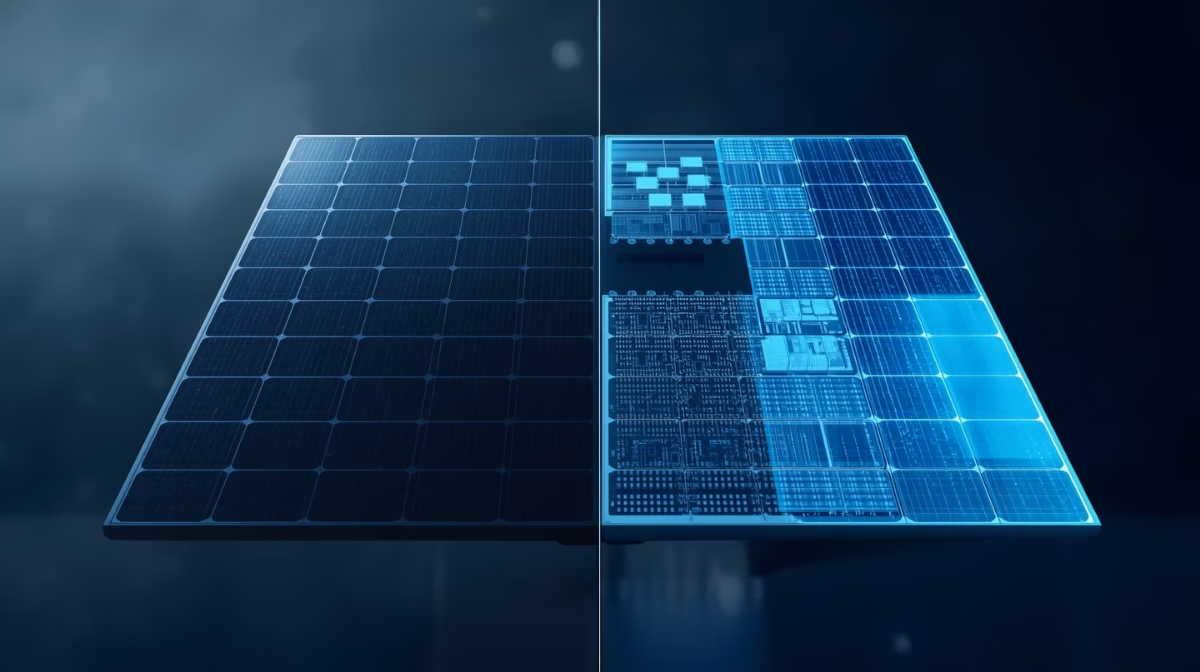
Solar energy has long been recognized as a cornerstone of the global clean energy transition. Initially, it was a straightforward method for converting sunlight into electricity. Now it has become smarter, more efficient, and future-ready. As energy demands rise and sustainability goals become more ambitious, solar technology is undergoing a fundamental transformation, moving beyond traditional designs to become smarter, more resilient, and deeply integrated with advanced electronics.
This evolution marks the arrival of next-generation solar panels, designed not just to generate power, but to optimize, adapt, and endure.
The Old Guard: Limits of Traditional Silicon Panels
For decades, silicon-based solar panels have been the predominant choice in the renewable energy sector, primarily due to their reliable performance, large-scale manufacturing capabilities, and steadily declining production costs. Their fully developed supply chain and consistent output have made them the go-to option not only for homes but also for businesses and power plants globally.
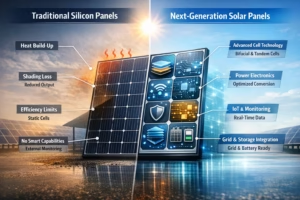
Nevertheless, such a level of evolution also comes with limitations. On the one hand, enhancing efficiency is becoming increasingly challenging as the material’s performance approaches its theoretical limit; on the other hand, output degradation issues in solar panels persist due to exposure to high temperatures.
Additionally, conventional panels experience energy losses resulting from shading, mismatch, and their limited ability to adapt under changing operating conditions. Most importantly, they lack embedded intelligence; thus, they depend on external systems to a great extent for their monitoring and optimization. This drives the need for more sophisticated, self-sufficient solar technologies.
Turning the Page: What “Next-Generation” Actually Means?
Next-generation solar is not just one step up in technology; it is a multi-dimensional advancement that fundamentally changes the capabilities of a solar panel. Instead of merely trying to achieve higher cell efficiency, next-gen solar adopts a system-level approach, where various innovations combine to provide energy that is not only smarter but also more reliable.
Some of the main aspects of next-generation solar include:
- Cutting-edge cell technologies like bifacial, heterojunction, and tandem cells are capable of raising energy output in different light conditions.
- Built-in power electronics that lower conversion losses, manage voltage at the module level, and thereby help achieve better system efficiency.
- On-board intelligence and IoT connectivity that enable real-time performance monitoring, maintenance prediction, and quicker fault detection.
- Improved materials and packaging that can resist heat, dust, humidity, and the impact of long-term environmental exposure.
- Compatibility with both the grid and storage enables energy storage systems and smart grids to integrate seamlessly.
These innovations have a cumulative effect of turning solar panels from mere hardware into energetic systems that are intelligent. Next-generation solar is not just about higher power output. It’s about generating energy more efficiently, managing it intelligently, and ensuring reliable, long-term performance. This comprehensive change marks the next era of solar technology.
The New Architecture of Solar Panels: Beyond the Flat Blue Rectangle
Solar panels are no longer confined to the familiar flat, blue rectangle mounted on rooftops or ground structures. With modern solar technologies, the change is not only in appearance but also in the capabilities through bifacial panels, flexible and lightweight modules, building-integrated photovoltaics (BIPV), and multi-layered cell designs.
These new formats allow solar systems to adapt to diverse surfaces, orientations, and use cases, maximizing energy capture beyond traditional installations. Furthermore, such advanced structures remarkably raise the overall system intricacy while placing greater demands on electronics. Current power generation is spread through different angles, intensities of light, and also thermal conditions, which, in turn, call for very accurate module-level monitoring and control.
In order to handle fluctuating outputs, minimize losses, and maintain system stability, it is necessary to have advanced power electronics, sensors, and smart control circuits. As solar panel architecture evolves, sophisticated electronics become the backbone that enables performance, reliability, and seamless integration into modern energy ecosystems.
When Solar Gets Smart: IoT-Enhanced Panels and Self-Aware Systems
The evolution of solar technology is increasingly defined by intelligence and connectivity. IoT-enhanced solar panels, also known as intelligent PV modules, are transforming conventional photovoltaic systems into self-aware energy assets capable of monitoring, analyzing, and optimizing their own performance.
The main factors contributing to smart PV modules are:
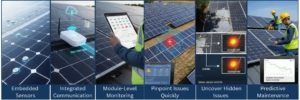
- Embedded sensors continuously measure voltage, current, temperature, and power output
- Integrated communication modules allowing real-time data transmission
- Module-level monitoring provides detailed performance visibility and diagnostics
While traditional solar systems depend on centralized or inverter-level monitoring, smart PV modules deliver very detailed, panel-level data. This helps system operators to:
- In a very short time, pinpoint failing or underperforming panels
- Reveal issues like shading, degradation, or heating that are difficult to detect.
- Promote predictive maintenance and thereby significantly cut downtime
Additionally, such solar energy systems can self-manage energy usage by:

- Adjusting power output based on the immediate surroundings and the demand load
- Orchestrating efficient power transfer in both extensive and scattered installations
- Getting smart grid-ready, collaborating with energy storage, and participating in digital energy platform ecosystems
IoT-enabled intelligent PV modules are not just an option, but a necessity for the solar industry, focusing on scaling their deployments in magnitude and intricacy. In doing so, they are turning solar energy from a passive power source to a responsive, data-driven system facilitating the attainment of maximized energy efficiency, high system reliability, and long-lasting value.
Power Electronics Take Center Stage: Efficiency Isn’t Just in the Cell
In next-generation solar panels, efficiency is no longer defined solely by the photovoltaic cell. The major leap in the panels’ real performance is mainly brought about by the investment in smarter power electronics, integrated into the system, while cell chemistry advances; however, these still progress only at a slower pace. Such power electronics are the ones that decide just how cleverly generated power is converted, controlled, and delivered for actual use.
Modern solar installations face challenges such as partial shading, temperature variations, voltage mismatch, and grid instability. Advanced power electronics—such as module-level converters, intelligent inverters, and optimized DC-DC architectures address these issues by minimizing energy losses and dynamically adjusting output at the panel or string level. This ensures consistent performance even under non-ideal conditions.
Intelligent power electronic devices not only raise the energy efficiency of a solar system to a new level but, at the same time, make it possible to get integrated with energy storage, smart grids, and monitoring platforms that are also computer-based. They facilitate prompt diagnosis, upscale system dependability, and prolong the life of the system.
As solar power systems become more complex and connected, power electronics, however, are the integral element on which the whole development depends, transmuting a cell with a really high conversion efficiency into an energy solution that is not only efficient but also performance-wise and ready for the future.
Durability Reimagined: Surviving Heat, Dust, Salt, and Time
As solar panels expand into harsher environments, durability has become a defining factor for next-generation solar technology. Advanced materials and intelligent design now ensure panels deliver consistent performance, even under extreme conditions:

- Improved encapsulation materials: Contemporary polymers and glass layers serve to shield the cells from moisture, UV irradiation, and mechanical stresses, thereby prolonging their operational lifetime.
- Thermal management: The solar panels feature heat-resistant coatings, as well as improved cell architecture to reduce performance degradation in hot areas.
- Dust and debris control: The use of self-cleaning coatings as well as anti-soiling surfaces helps to keep the solar panels from efficiency losses caused by the buildup of dust.
- Corrosion resistance: The use of salt-resistant materials for the frames and connectors makes it possible for the solar panels to perform well even in the salty air of the coastal and marine environment.
- Ruggedized electronics: The embedded smart electronics are made to be resistant to waves, vibration, and various kinds of environmental stresses.
- Longevity is the key: The materials as well as designs are tweaked to yield decades of energy supplied consistently, giving lower maintenance and higher return on investment.
Next-generation solar energy is a life-giving force that refuses to compromise, designed to perform, endure, and thrive precisely where traditional panels fall short.
Looking Ahead: Should You Embrace Next-Generation Solar Now?
Chief Technology Officers (CTOs), product managers, and energy strategists may see the transition to next-generation solar devices as a matter of going beyond just the efficiency numbers. It is also about being strategically prepared and getting the most long-term value out of the decision.
Next-generation panels combine advanced cell architectures, integrated power electronics, and IoT-enabled intelligence, offering real-time monitoring, predictive maintenance, and optimized energy output. Unlike traditional panels, they are designed to withstand extreme temperatures, dust, humidity, and other environmental stresses, ensuring consistent performance over decades.
While initial investment may be higher, the operational benefits of enhanced uptime, reduced maintenance costs, and improved grid integration often outweigh the upfront expense.
For organizations targeting sustainability, resilience, and digital energy integration, these panels are a future-proof solution. Early adoption positions companies at the forefront of energy innovation, enabling smarter planning, greater energy independence, and measurable returns. For decision-makers, the question is less “if” and more “how quickly” they can integrate next-generation solar into their energy portfolio.
Standing at the Threshold of a New Solar Era
The solar industry is entering a transformative era. Next-generation panels combine advanced materials, smart electronics, and resilient designs to deliver higher efficiency, real-time intelligence, and enhanced durability.
These innovations empower businesses and energy planners to optimize performance, reduce operational risks, and future-proof their energy infrastructure. As solar becomes smarter and more integrated, the opportunity to harness clean energy effectively has never been greater.
Take the next step with Syrma SGS to deploy cutting-edge solar solutions that drive sustainability, efficiency, and long-term value for your organization.
Disclaimer: Images used in this Blog are AI generated