Syrma SGS

Blog Articles

RIFD

RFID applications – Revolutionizing Automation

RFID (Radio Frequency Identification) is a technology with various applications across domains – managing manufacturing processes, inspection of equipment, assets, supply chains, logistics, and tracking of goods right till consumption. In recent times, the technology has made a huge impact on process automation systems by enabling tagging and tracing of different units across the manufacturing process. This information can be leveraged to reduce inventory, enhance quality and automate manual processes to increase speed and efficiency. RFID technology is the underlying platform of an effective asset management system and is also pivotal to the IoT ecosystem. Automation – the enabler that saves time and money RFID solutions track the movement of goods automatically and transfer data to an ERP or financial management solution thereby eliminating the need for manual form filling and complex spreadsheets. RFID readers installed at strategic locations save time – like on a production line, or as products enter the inventory store, once again eliminating the need for manual intervention. RFID tagging is fast gaining popularity although solutions simply implemented at the back end of processes prior to shipment, do not have much of an impact on process automation systems. While barcodes are used to track and trace, RFID is definitely a better technology considering that the tags can be read in volumes from a distance of 30 feet and do not require line of sight. Also, large amounts of information can be stored besides the fact that they are rewritable.Benefits of RFID in automation Manual processes can be automated: With RFID tags applied in production, a time & date stamp is registered into the data associated with each product’s serial number. This helps in easy tracking of the product across the supply chain. Better QC and safety: Before the implementation of RFID technology, plant managers were holding entire batches if issues were suspected. To ensure safety, timelines were impacted and more product than necessary was held in the process chain. With RFID, managers can identify what groups of products are affected thereby reducing the quantities held. Enhanced productivity: The practice of inducting pallets into an Automated Storage/Retrieval System (ASRS) gets easier as supervisors need not place the pallet tags with accuracy. RFID ensures the tag is read when it is on the correct side irrespective of its exact location, thereby increasing the effectiveness of the ASRS. Improved accuracy at shipping: Occasional human error pushed the unintended pallet onto the outbound platform. Loaders were unable to check and double check this consignment with accuracy always, resulting in the wrong product being delivered to the customer. RFID tags and readers in the ASRS, ensure the pallet tag is accurately read each time to verify the pallet count. Improved inventory insights: With RFID technology the counting of an individual unit will be accurate considering each unit has a serial number assigned to it. This technology allows the counting of units to be accurate as those with an accurate serial number will be accounted for and others will be dismissed. Boosting revenues: With the edge it offers in inventory management, RFID provides a distinct competitive edge increasing customer satisfaction and boosting sales. Reduction in process time: RFID solutions can be integrated with other supply chain solutions like automated product handling to reduce the time cycles across the supply chain. RFID tagging has been successfully implemented the following areas: Inventory management Asset and equipment tracking Inventory control Cargo and supply chain logistics Vehicle tracking Customer service and loss control Improved visibility and distribution in the supply chain Vehicle tagging to enable quick and accurate toll collection Wagon tagging in railways In India, RFID has transformed the toll collection process on our highways through FASTag. FASTag is the RFID Tag fixed on the windscreen of vehicles that enables a scanner to automatically deduct toll payments as vehicles pass through the gates. Railway companies are deploying RFID-based solutions with rugged tags to get a comprehensive view of rail assets, including their condition, status and location of assets, enhancing safety and ensuring timely maintenance. Syrma SGS Technology has a high level of expertise in RFID solutions. The company develops custom engineered RFID tags, RFID readers, and software for access control monitoring, inventory management, product authentication, etc. Syrma designs, engineers, and manufactures RFID tags in clear, epoxy, glass, and molded encapsulations covering standard wavelengths (LF, HF, and UHF). The company designs multi-protocol, custom-made, readers compatible with standard RFID tags and connects with iOS and Android devices. Syrma SGS also develops custom RFID software for various applications such as access control monitoring, inventory management, product authentication, etc. A proven partner with expertise, logistics and product mix Syrma SGS has been the preferred EMS partner for its customers over the last 40 years through innovative and efficient Electronic System Design and Manufacturing. The company provides high-mix, flexible volume precision OEM manufacturing. Syrma has proven expertise in RFID tags, cards and underlying technologies and offers OEM solutions to businesses across domains in this space. Syrma SGS serves global OEMs in 20+ countries and has supplied several hundreds of million units to satisfied customers.

RFID applications – Revolutionizing Automation Read More »

Syrma SGS as your EMS partner Assuring you of global quality standards

Syrma SGS as your EMS partner: Assuring you of global quality/standards

If you are looking for a reliable EMS partner with excellent manufacturing capability, wide product expertise, and a global presence, your search ends here. Syrma SGS Technology is just right for you. Syrma SGS Technology is among the top electronics system design and manufacturing company offering proven Electronics Manufacturing Services backed by optimal electronics design, engineering and production solutions. The company boasts of a 40-year legacy of innovative electronics and specializes in high-mix, flexible-volume precision manufacturing. Syrma designs custom RFID solutions and high frequency magnetics. Over the last decade, the company has shipped more than 500 Million units across the globe and has 11 facilities across 8 locations in India. Quality Assurance – proven over the years Syrma SGS Technology has in place proven Quality assurance processes to deliver consistent Quality of the product which meets customer requirements. We maintain internationally recognized QA certifications such as ISO9001, ISO14001, ISO45001, ISO13485, IATF16949 & ANSI/ESD S20.20 Our Engineers are certified IPC specialist for J-STD-001, 7711/7721 & IPC-A-610 to deliver Quality products to customers. Our Incoming Quality Assurance includes measurement through precise VMM (Video Measuring Machine), Co-ordinate Measuring Machine (CMM) & Profile projectors. PCBA’s are manufactured using State-of-the-Art equipment which includes Solder Paste Inspection (SPI) , Nitrogen controlled Reflow machine, Automatic Optical Inspection (AOI), 3D X-Ray, Flying probe testers, In-Circuit Testers and Automated Test Equipment (ATE). Reliability of the product is further assured through testing the product in Climactic chambers, Vibration testers and Bump & Drop testers. Reliability and safety tests evaluate planning and execution for incoming and outgoing parts. We have in place an exhaustive supplier Quality Assurance that includes component failure analysis, corrective actions, first article evaluation, new parts/source inspection, new qualification, performance feedback and periodic process audits. System Quality Assurance includes conducting in-process yield monitoring with documentation control, periodic ECN/DN verifications, new QA system implementation, process audits, product failure analysis, qualification of new products, and QA system audits including well defined CAPA system using 8D methodology. Outgoing QA involves sampling techniques for product lot inspection, monitoring the quality level of our products, receiving customer feedback and analysis. Failure Analysis We provide comprehensive failure analysis (FA) of multiple electronic assemblies and components: Printed Circuit Boards (PCBs) and Printed Wiring Boards (PWBs); Integrated Circuits; memory chips; transistors, diodes, capacitors, and resistors; LEDs, and power modules. We analyze devices, components, and assemblies for specific defects, such as ESD, EOS, shorts, opens, corrosion, solderability, vibration, thermal fatigue, and connector failures. We use state-of-the-art testing equipment including ATT Micro tester, Profile Projector, X-Ray inspection system and Customized automated test equipment. Whether you are a multinational corporation with presence across geographies or a start-up with big ambitions, we are best poised to be your trusted EMS partner and offer you a range of solutions to help you succeed. Partner with the team at Syrma SGS.

Syrma SGS as your EMS partner: Assuring you of global quality/standards Read More »

Battery Management System: Reference Design for High Voltage systems

Introduction: Battery Management system (BMS) is an electronic system considered to be the brain of the battery packs. The two main functions of the BMS are safety protection and energy management. These are essential to manage the operational & safety parameters of the battery pack over the expected lifetime. The BMS estimates the state of health (SOH) and state of charge (SOC). The BMS also continuously monitors and provides protection during high charging current in coordination with charger. During the discharging phase, the BMS monitors and communicates with the Inverter.  In brief, the BMS is critical for battery pack operation. The following key functions are incorporated in the BMS design. Parameter Estimation: Estimates the cell level and pack level SoC, SoH and communicates with controllers via CAN. Data Storage: Records the pack & individual cell level signals and stores it in an inbuilt memory. Control: Measures temperature, voltage & current and controls them to achieve cell balancing. Diagnosis: Predicts faults, monitors cell level variations, senses errors, identifies safety risk and sends inputs to drivers for decision making Opportunities for BMS industry The Indian Electric vehicle industry has witnessed a phenomenal growth. Reflecting its commitment to the Paris agreement, the Indian Government had unveiled “National Electric Mobility Mission Plan 2020” that aims to bring in a major shift in Electric Vehicles by 2030. This brings a plethora of opportunities in the BMS space. Moreover, the global landscape shows that the Battery Electric vehicles market is expected to reach 95.1 Mn by end of 2030 compared to 7.97 Mn by end of 2020. Considering every EV will need atleast one BMS, we are looking at a phenomenal growth in the current decade. Key functional requirements to be addressed in BMS design The battery is the primary source of energy for Electric vehicle. The energy density, durability of battery and proper utilization of energy determine the performance of the vehicle. A reliable BMS is responsible to ensure efficiency and safety of EV batteries. Based on our assessment, following are the technical gaps that need to be addressed in the growth of BMS market, Accurate estimation of SOC, SOH for Dynamic conditions Accurate Impedance measurement of cells Cell to Cell high differential voltage Syrma SGS – Reference design: Figure 1: High Level System Blocks of Slave BMS   Figure 2: High Level System Blocks Interface of Master BMS   Syrma SGS has developed the reference design of BMS for automotive quality of highest safety (ASIL – C). The system comprises of approx. 200 cells in series to get an output voltage of approx. 750V. A single BMS AFE (ADBMS6830) can monitor upto 16 series connected battery cells. The cell measurement range of 0V to 5V makes the ADBMS6830 suitable for most battery chemistries. Multiple ADBMS6830 devices are connected in daisy chain, permitting simultaneous cell monitoring of long, high voltage battery strings. isoSPI transceiver (ADBMS6821) interfaces the AFEs in daisy chain to the host microcontroller enabling bidirection operation and communication integrity. Redundant communication transceivers address any communication failure in the Daisy chain. AFEs have passive balancing for each cell with individual PWM duty cycle control. Thermistor over each balancing resistor monitors the temperature. Other features include an onboard 5V regulator, where overall current consumption is reduced to 1mA. The system has been designed to ensure accuracy for voltage measurements, safety mechanisms, open wire detection and comprehensive diagnostic features. The AFE of the BMS communicate over isospi transceiver (ADBMS6821), that drives differential signals using matched source and sink currents, eliminating the requirement for a transformer center tap and reducing EMI. The drive currents and the comparator thresholds are set by a simple external resistor divider, allowing the system to be optimized for required cable lengths and desired signal-to-noise performance. Customers can minimize their time to market by leveraging Syrma SGS’s BMS that is ASIL – C reference design. Further, the design is imbibed with CAN connectivity, Automotive Bluetooth wireless connectivity, memory for data logging and safety mechanisms for thermal runaway. Much Needed Government support for development of indigenous BMS ecosystem: Need for accessible, affordable compliance & validation test centres: Currently, the compliance tests (EMI/EMC) are expensive and need to be done in specific labs. As the EV BMS ecosystem is relatively new and burgeoned with startups, financial assistance in any form will help them to do more compliance tests Need for financial incentives to compete with the global players: More than 70% of BMS deployed in India are imported from China. The Chinese exporters get a credit of 13% which is passed on to Indian importers. This further puts the Indian manufacturers at a disadvantage in terms of cost competitiveness. Incentive programs for next generation technology development support Conclusion: The EV market in India is poised to grow in a structural and consistent manner. Recent incidents like EV 2 wheelers catching fire put a lot of focus on safe charging and discharging of the EV. There could be multiple reasons ranging from poor cell quality or battery design and improper BMS. Challenges such as these have opened opportunities for companies like Syrma SGS to promote their safe and automotive qualified BMS designs. Our comprehensive reference designs enables customers to launch their products quickly in the market.

Battery Management System: Reference Design for High Voltage systems Read More »

The future of miniaturization in wearable products

Wearables is among the fastest growing domains in consumer goods, and one that depends extensively on miniaturization in electronics. Consumers are getting increasingly dependent on smartphones and smart watches with extensive features – those that track their daily walking steps, display health parameters, book appointments, deliver emails and more. Then there are those earbuds that deliver high fidelity stereo sound minus the cables. Soon the market would see smart glasses with built in capability to take photographs, record videos, and offer augmented reality. Common to all these products is the fact that they are marvels enabled by miniaturization and the amazing developments made possible in design and manufacture. This is beyond the size reductions possible by shrinking semiconductor devices and newer approaches are needed to get to where we wish to. Among the most successful of the approaches being ushered in is ‘SiP’, System in a Package technology. Simply explained, SiP technology is a completely sealed package consisting of all active and passive components of an electronic subsystem along with the required interconnections. SiP presents very important benefits. For one, since the interconnections are short, high operating speeds can be achieved. Also, within the package, components can be stacked for optimum space utilization. The other design advantage is the effective EMC shielding and since the package is completely sealed, it is protected from the external environment, very crucial for wearable technology. An excellent example of the SiP approach being deployed successfully in wearable technology is True Wireless Stereo (TWS), incorporated in the present generation smart earbuds. These earbuds do not need physical connections and can connect via Bluetooth. Also, their internal batteries are charged inductively. True wireless technology earbuds also offer features such as volume control and track selection, but the real differentiator is the accommodation of batteries in this tiny device. This has been achieved by shrinking the electronic components used in the earbuds through SiP technology. Miniaturization of electronic subassemblies frees up space enabling designers to accommodate larger and more effective batteries without enhancing the size of a device. This makes it possible to create devices with longer battery life, a key requirement of end users across segments. Manufacturing of such miniaturized subsystems requires a huge level of expertise and cutting-edge technology, a capability that rests with a few companies. Syrma SGS Technology offers the best electronic manufacturing services in India and has world class expertise in developing optimal electronics design, engineering and production. The company is one of the best electronic systems design and manufacturers in India and offers a high mix, flexible volume precision manufacturing and designs custom magnetic, memory and RFID solutions.

The future of miniaturization in wearable products Read More »

Smart meters syrmasgs

Smart Meters

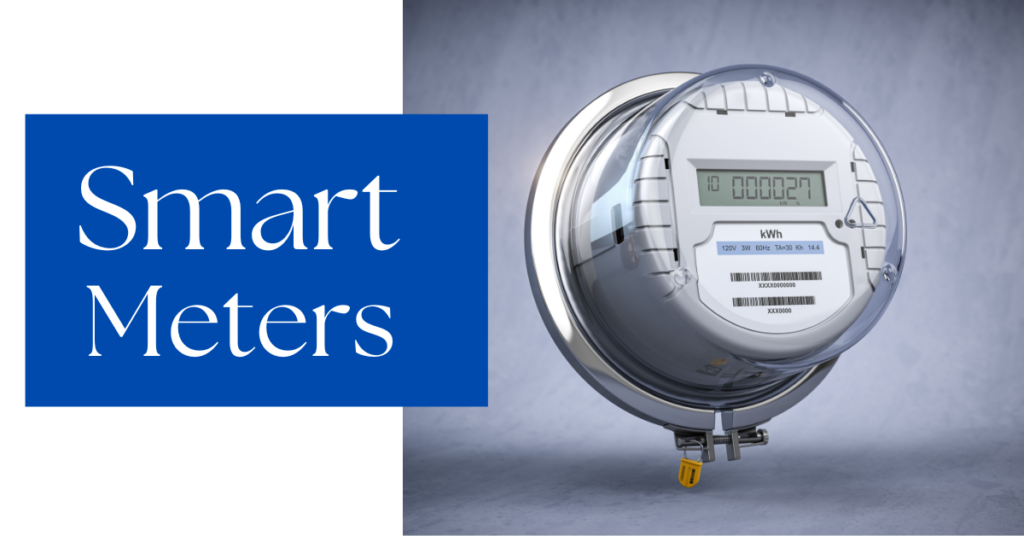
Digitization has revolutionized several sectors and continues to disrupt several others. The power sector has been one which has witnessed this transformation. How we consume and monitor usage of electricity has significantly transformed over the last 10 years. Electromechanical meters have made way for smart and intelligent meters. Let us understand the various aspects of this technology and how Syrma SGS is playing a small role in contributing to this transformation. Introduction A smart meter is one of the most important devices used in the Smart Grid (SG). The device is an advanced energy meter that gathers information from the end users’ load devices, measures the consumer’s energy consumption and then provides additional information to the utility company or system operator. A smart meter incorporates several sensors and control devices and is supported by dedicated communications infrastructure. A key feature is data analytics that deals with data acquisition, communication, processing and the intelligence it brings to the consumer, utility company and the Government for demand / investment planning, dynamic tariffs, load planning, etc. The Government of India’s initiatives like ‘Make in India’ and ‘Smart Cities’ need reliable and continuous power supply. India’s power sector has traditionally faced several challenges like AT&C (Aggregate Technical & Commercial) losses, inefficient transmission and distribution due to dated infrastructure, and power theft. Advanced energy management coupled with increased use of renewable energy sources is key to ensure sustainable ways to power our nation. Indian Power Sector As the world’s sixth largest consumer of energy, India accounts for 3.4% of the global energy consumption. The consistent high growth of the Indian economy has resulted in a surging demand for energy. Since independence, the installed capacity has grown from 1,362 MW to 400 GW. In the last decade alone, the installed capacity of renewable sources of energy for electricity generation has grown at an annual rate of 20%. Despite this, millions of households still receive electricity for just a few hours each day, particularly in remote regions. The distribution system suffers from frequent and long duration outages. The AT&C losses across India have reduced from 23.70% in FY15 – 16 to 21.83% in FY19 – 20. While 18 DISCOMs witnessed a decline in AT&C losses, 12 DISCOMs witnessed an increase between FY16-20. These losses are economically draining the distribution facilities across India. In fact, a few states have AT&C losses upwards of 40%. To address these issues, bring efficiency, and seamlessly integrate emerging technologies in the areas of monitoring, automation, control, communication and IT systems, active participation of all stakeholders is key. It is expected that the ambitions goals of the Indian power sector can be achieved by deploying smart grids, thus improving efficiency of the sector. Policy Support and State-level activity: The Smart Meter National Programme (SMNP) aims to replace 250M conventional meters with smart meters in India. This programme is being implemented under the BOOT model on cost plus approach, which means a significant portion of the Capex and Opex are taken care by EESL (Energy Efficiency Services Limited) and private infrastructure companies. EESL has signed MoUs/agreements for smart meters with the states of Andhra Pradesh, Uttar Pradesh, Haryana, Bihar, NDMC-Delhi, Rajasthan, Telangana and for prepaid meters with the states of Uttar Pradesh and Tripura. Currently, there are ~4 million smart meters installed in India by various entities. 7.3 million meters are under implementation. The government’s plan is to install 250M smart meters in the next 3-4 years across all the states. Bihar has taken the lead to install prepaid smart meters because of high AT&C losses. For a distribution company, prepaid reduces the working capital requirement significantly as payment is upfront. This increases their ROI by about 0.5%. Major OEMS who have won in the SMNP tenders include Bosch, EDF UK (Genus), Gram Power, Genus, Synergy, L&T, Landys Gyr, Schneider, Enzen, Dongfang, PSPCL, Radius, Wipro, Chemtrols, Secure Meters, Zen Meters and Synergy. Technical Tear Down: Smart meters enable a very accurate measurement of the usage of the electricity. This usage is converted to a digital format before it is passed to a processor. The processor section formats the data, and will normally display it on the smart meter itself and also passes the data in a suitable format into the radio communications section and for these operations, the smart meter requires 3 major boards. The first is the communication module for wireless communication. The second section is the main board for installation display, microcontroller unit (MCU) and two batteries. This is responsible for display, data processing, storage and power-supply of the meter. The main board is connected through wire-to-board interconnect to the third board, a power board. The latter is responsible for system power-supply, voltage stabilization and circuit regulation. The radio communications section of the smart meter will communicate with the utility provider so that consumption can be monitored on a regular basis. A number of communications technologies can be used for this including power line, cellular (often 2G GSM), LoRa, RF and others. Typically the system provides two way communication. A consumer monitor also called a smart energy monitor or In Home Display, IHD, is also provided and a short range wireless communication technology is used for this. Again there are a variety of systems that can be used. These smart energy monitors or IHDs provide accurate insights providing information on monthly, weekly, and daily usage and current consumption. This helps the user manage the energy consumption more effectively. The smart meter draws a very small amount of electricity from the line supply to function, enabling it to communicate with the user display and also the utility supplier. How Does It Communicate? Smart meters support bidirectional information flow. They are installed at the end user premises to collect information on electricity usage of appliances at regular intervals using Local Area Network (LAN). The data from the individual smart meter is collected by local data aggregators using Neighborhood Area Networks (NAN). Smart meters communicate with each other forming a mesh to reach the local

Smart Meters Read More »

Choosing the Right Partner in Times of Component Shortage

Choosing the Right Partner in Times of Component Shortage

  The rising content of electronics in devices, vehicles and machines coupled with the unprecedented component shortage situation puts a lot of global manufacturers’ supply chains at risk. Most components, particularly the actives are in short supply, at lead times of 30-60 weeks and at dramatically higher prices. Manufacturers of electronic assemblies need to choose the right EMS partner to ensure that supply chain challenges are minimized, and production issues don’t take a toll on business performance. Most parameters on which an EMS partner must be evaluated on during normal times, apply even now. EMS partners must have a reputation for consistent quality, be responsive, capable to address needs, have proven technical expertise, and the ability to deliver on schedule at competitive costs. Commitment. Track record. Bandwidth. The partner you are considering engaging with should be supportive and willing to go the extra mile. Contact a few customers of theirs to ascertain that they can address the requirements as expected. Do check if they have the bandwidth and capability to take on newer engagements and are not spreading themselves too thin. Interact with teams from business development, project management, supply chain, operations and engineering to evaluate capability of their employees. Presence and reach                         Your partner has to have a presence across multiple geographies and enduring relationships with distributors and manufacturers in multiple countries. This would be of strategic importance to you compared with a partner that has a presence in one region and limited supplier relationships. You can expect better support considering that bandwidth and network. Ensure that the partner you select is strong financially and is able to invest in people, capabilities and infrastructure as your business grows. Proven expertise, logistics and product mix Look for a partner that has a high-mix, precision manufacturing capabilities. Consider their technical and manufacturing capability, compliance and quality certifications. Also evaluate their locational advantage, connectivity, and ability to ship in the shortest possible time. Export requirements are best served out of units located in Special Economic Zones. Look for experience on similar products manufactured and supplied to other customers in your industry or geography. Engineering capabilities Look for a partner who is able to support you on product design and development, has capabilities on design for manufacturing, tester development and New Product Introduction and Manufacturing Engineering. These capabilities will help reduce the time to market and improve First Pass Yields. Once you identify a partner you feel can work for you best, work on the terms of engagement, share your requirements, conclude any audits, agree on commercials, define schedules for product development, pilot and series production, and get into project execution backed by solid program management. Syrma SGS Technology Limited – The best electronic manufacturing services partner you can get Syrma SGS Technology Limited is one of India’s leading Electronic Systems Design and Manufacturing companies. We offer product design, PCB Assembly, Box Builds, Tester Development and Repair & Rework services to customers across 20+ countries. We are manufacturing partners to several Fortune 100 companies. The company boasts of a 40-year legacy of innovative electronics and specializes in high-mix, flexible-volume precision manufacturing Syrma SGS also designs custom high frequency magnetics and RFID solutions. Over the last decade, the company has shipped over 600 Million products across the globe. The company has 11 manufacturing facilities across 8 locations in India and has 18 high speed SMT lines. Syrma SGS also has strong box build capabilities for final product assembly. This combination of manufacturing strength, technical expertise, and logistical advantage enables Syrma SGS to deliver unparalleled value to our customers.

Choosing the Right Partner in Times of Component Shortage Read More »

SYRMA-SGS-MOU-with-GoTN

Syrma SGS exchanged a Memorandum of Understanding with the Government of Tamil Nadu

Syrma SGS Technology Limited has exchanged a Memorandum of Understanding with the Government of Tamil Nadu at the recently held Investment Conclave – July 2022 “Tamil Nadu – Investors First Port of Call” in Chennai. Our CEO, Dr. Sreeram Srinivasan exchanged the MoU in the presence of Hon’ble Chief Minister of Tamil Nadu, Mr. M. K. Stalin, Hon’ble Industries Minister Mr. Thangam Thennarasu, other dignitaries and Industry leaders. We have a long association with Tamil Nadu and have facilities across the state, including our plants and our offices and engineering center in Chennai and satellite factories in Madapattu, Uthiramerur, Ulundurpet and Kadampuliyur. We also have an extensive supplier ecosystem within the state. We are extremely proud to contribute to the Industrial Development of the State. We are also a large employment creator and have taken significant initiatives to promote rural and women employment in the State.   

Syrma SGS exchanged a Memorandum of Understanding with the Government of Tamil Nadu Read More »

Scroll to Top