
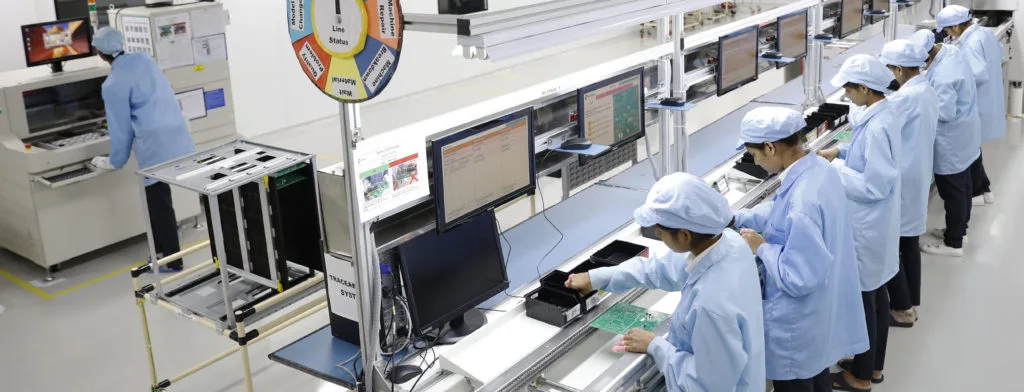
India’s Electronics Manufacturing Services (EMS) sector is growing rapidly, driven by initiatives such as Make in India and the Production Linked Incentive (PLI) scheme.
As the country strengthens its position as a global manufacturing hub, the However, choosing the right EMS partner is more than just comparing revenue. For example, a smartphone manufacturer, a medical device company and a defence OEM require different production, compliance and engineering capabilities.
This guide analyses 12 leading EMS companies in the country based on six main sourcing criteria: volume capability, certification depth, design and ODM expertise, backward integration, specialty capabilities and execution strength.
Research Summary
The research presented in this guide depends on public sources such as company annual reports, investor presentations, exchange filings, analyst coverage, certification disclosures, industry publications and corporate websites.
How We Evaluated These 12 EMS Companies?
Partnering with an EMS is a strategic move that has an impact not only on the quality of the product, but also on certification compliance, time to market, scalability and supply-chain resilience.
Revenue is a significant metric, it doesn’t tell the whole story.
To create a more useful comparison, we evaluated each company using 6 criteria commonly considered by procurement leaders, manufacturing heads, quality teams and engineering organizations.
1. Volume Profile
Not every EMS company is built for the same production environment.
Some manufacturers specialize in extremely high-volume consumer products such as smartphones, televisions and appliances. Others focus on high-mix, low-to-medium-volume products used in regulated sectors such as aerospace, defence, railways, industrial automation and medical technology.
Choosing a partner optimized for the wrong production model often results in inefficiencies, slower response times, or increased manufacturing costs.
Key Evaluation Areas:
- High-volume manufacturing capability
- High-mix manufacturing expertise
- Production flexibility
- New Product Introduction (NPI) support
- Scalability across product lifecycles
2. Certification Depth by Vertical
Certifications are often the fastest indicator of whether an EMS provider can operate in a specific regulated industry.
Different sectors require different quality frameworks and compliance standards.
Key certifications considered:
- IATF 16949 – Automotive manufacturing quality systems
- AS9100 – Aerospace and defence quality management
- Nadcap – Aerospace process accreditation
- ISO 13485 – Medical device manufacturing
- IRIS – Railway industry quality standards
- RDSO approvals – Indian railway requirements
For quality leaders and compliance teams, certification depth is often as important as manufacturing capability itself.
3. Design & ODM Depth
The gap between a contract manufacturer and a true manufacturing partner is often design capability.
While some EMS providers focus purely on build-to-print manufacturing, others offer engineering support, product redesign, testing, validation, prototyping, and Original Design Manufacturing (ODM) services.
This becomes especially valuable during:
- Product localization
- Cost optimization initiatives
- Component obsolescence management
- Faster NPI cycles
- Product lifecycle extensions
Companies with strong ODM capabilities can help reduce development timelines and improve manufacturability from day one.
4. Backward Integration
Supply-chain resilience increasingly depends on how much of the manufacturing value chain an EMS company controls internally.
Providers with in-house capabilities such as PCB manufacturing, magnetics, tooling, cable assemblies, sheet-metal fabrication, or component integration can often deliver stronger cost control and reduced sourcing risk.
Evaluation areas included:
- PCB capability
- Magnetics manufacturing
- Component localization
- Mechanical integration
- Box-build capability
- Testing infrastructure
5. Specialty Capability
Many sourcing decisions ultimately come down to one specialized requirement.
For example:
- RFID product development
- Aerospace-grade electronics
- Medical device assembly
- Defence electronics
- Precision magnetics
- Industrial IoT systems
These capabilities cannot be measured by revenue alone and often determine whether a supplier can support a program successfully.
6. Concentration & Execution Risk
Even technically capable manufacturers can become risky sourcing partners if operational fundamentals are weak.
We therefore evaluated indicators such as:
- Customer concentration
- Working-capital discipline
- Balance-sheet strength
- Facility diversification
- Export exposure
- Parent-company dependency
These factors directly influence long-term manufacturing stability and supply continuity.
This provides a more realistic view of where each manufacturer fits within India’s evolving electronics manufacturing landscape and helps OEMs shortlist partners based on actual sourcing requirements rather than market perception.
Top 12 EMS Companies in India (2026)
The companies below are ranked based on their breadth of verified capability across the six evaluation criteria discussed earlier.
1.Syrma SGS – Best for OEMs Needing the Broadest Single-Vendor Capability Span

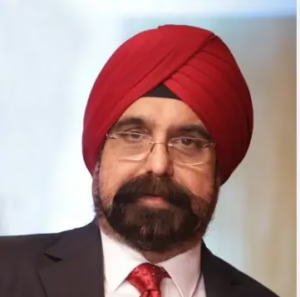
Jasbir Singh Gujral (Managing Director)
Among the companies on this list, Syrma SGS stands out for a capability combination that few EMS providers globally and arguably none in India offer under a single organization. The company combines electronics manufacturing services, engineering and ODM capabilities, RFID solutions, high-frequency magnetics, MedTech ODM and high-reliability manufacturing for industrial and emerging defence applications.
For OEMs operating across multiple product categories, this breadth can significantly reduce supplier complexity. Instead of coordinating separate vendors for manufacturing, RFID systems, engineering support, testing infrastructure and specialized magnetic components, companies can access these capabilities through a single partner.
Why Syrma SGS Ranks #1?
The ranking is not based on revenue leadership. In fact, several competitors on this list are larger in specific segments. Syrma SGS earns the top position because of its unique capability span and diversification.
The company reported FY26 revenue of approximately ₹4,819 crore, supported by operating EBITDA of roughly ₹545 crore and an order book approaching ₹6,400 crore. Export revenue crossed ₹1,200 crore, reflecting strong growth in international markets and increasing acceptance among global OEMs.
Unlike many EMS providers that remain concentrated in one or two sectors, Syrma SGS serves customers across:
- Industrial electronics
- Consumer electronics
- Automotive electronics
- Healthcare and MedTech
- Railways
- RFID and IoT
- IT hardware
- Emerging defence applications
The company operates more than 12 manufacturing facilities and three R&D centers while serving over 270 customers across 20+ countries.
Capability Breadth That Few Competitors Match
What differentiates Syrma SGS most is its ability to support customers beyond traditional PCB assembly.
Core capabilities include:
- Electronic Manufacturing Services (EMS)
- Product engineering and ODM services
- New Product Introduction (NPI)
- Functional testing and test-system development
- RFID tags, readers, inlays, and software platforms
- High-frequency magnetics and electromagnetic components
- Medical electronics design and manufacturing
- Box-build and system integration
Its proprietary RFID portfolio, marketed under the Perfect ID brand, adds a specialized capability rarely found within traditional EMS organizations. The company manufactures RFID tags, inlays, readers, and associated software platforms for asset tracking, logistics, industrial automation, healthcare, and smart infrastructure applications.
Proven Customer Portfolio
Publicly disclosed customers include:
- TVS Motor
- Bosch
- A.O. Smith
- Hindustan Unilever
- Eureka Forbes
- Atomberg
- CyanConnode
- Total Power Europe
This customer mix demonstrates the company’s ability to support both Indian and international OEMs across multiple industries.
Design-Led Manufacturing Advantage
A major differentiator is Syrma SGS’s engineering-led approach. The company has published more than 20 documented case studies covering:
- Medical imaging systems
- RFID-enabled healthcare solutions
- Asset-tracking platforms
- Railway RFID applications
- Aerospace electromagnetic components
- Industrial power electronics
- Automotive lighting systems
- Telecom infrastructure products
One notable example involved developing a proprietary end-of-line functional PCB tester from the ground up, including hardware, firmware and control systems.
Strategic Investments Strengthening Future Readiness
Recent strategic initiatives further strengthen the company’s position:
- Elcome acquisition for defence and maritime electronics
- Elemaster joint venture for high-reliability industrial and railway electronics
- Shinhyup PCB joint venture for multilayer and flexible PCB manufacturing
- Johari MedTech collaboration
- Solar electronics initiatives through Premier Energies partnership
These investments improve backward integration while expanding access to high-growth verticals.
Honest Limitation
Syrma SGS is not the largest EMS provider by revenue, with Dixon leading in high-volume consumer electronics. For space, missile, or strategic defence programs, specialists like Centum and Kaynes offer deeper heritage and certification depth.
Best Fit For
Industrial, automotive, RFID/IoT, MedTech, and multi-vertical OEMs seeking design-led manufacturing and end-to-end EMS capabilities from a single partner.
2. Dixon Technologies – Best for High-Volume Consumer Electronics and Smartphones
Atul B. Lall (Managing Director)

As India’s EMS provider by revenue, Dixon Technologies is the preferred manufacturing partner for OEMs seeking scale, speed, and cost efficiency. The company has played a pivotal role in India’s electronics manufacturing growth, particularly in smartphones, consumer electronics, and home appliances.
Why Dixon Stands Out?
Dixon manufactures products for leading global brands, including Samsung, Motorola, Xiaomi, Oppo, Vivo, Realme, HP, Acer, Panasonic, and Reliance. Beyond large-scale assembly, it is expanding into higher-value component manufacturing through strategic joint ventures covering camera modules, display modules, and communication hardware. This strengthens its position within India’s PLI-driven electronics ecosystem.
Key Strengths
- India’s largest EMS company by revenue
- Leading smartphone manufacturing capacity
- Strong global customer portfolio
- Extensive production scale and supply-chain capabilities
Honest Limitation
Dixon’s expertise lies in high-volume manufacturing, making it less suited for low-volume, highly regulated sectors such as aerospace, medical devices, defence electronics, or RFID-enabled products, where engineering depth and specialized certifications are often more critical than manufacturing scale.
Best Fit: Smartphone brands, consumer electronics OEMs, appliance manufacturers, and companies prioritizing large-scale, cost-efficient production.
3. Kaynes Technology – Best for Aerospace, Rail, EV, Medical, and High-Reliability Manufacturing

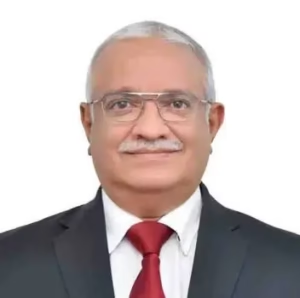
Ramesh Kunhikannan (Managing Director)
Kaynes Technology has established itself as one of India’s leading high-mix EMS providers, serving industries where engineering precision, regulatory compliance, and reliability take precedence over production volume. Its diversified portfolio spans industrial electronics, electric vehicles, aerospace, defence, railways, and medical technology.
Why Kaynes Stands Out?
The company’s biggest differentiator is its comprehensive certification portfolio, including AS9100, Nadcap, IRIS, ISO 13485, and IATF 16949, one of the broadest certification stacks among Indian EMS companies. Kaynes has also expanded into semiconductor packaging (OSAT), PCB manufacturing, railway safety systems, smart metering, and SpaceTech, while strengthening its rail capabilities through the acquisition of Sensonic GmbH.
Key Strengths
- Extensive certification portfolio
- Strong presence in aerospace, rail, EV, and medical sectors
- Engineering-led manufacturing approach
- Healthy order-book visibility and international customer base
Honest Limitation
Kaynes is simultaneously scaling multiple capital-intensive businesses, including EMS, PCB manufacturing, and semiconductor packaging. While this supports long-term growth, buyers should carefully evaluate execution capabilities and working-capital performance before entering strategic partnerships.
Best Fit: Aerospace, railway, EV, industrial automation, and medical-device OEMs requiring certified, high-reliability manufacturing.
4. Avalon Technologies – Best for Export-Led Aerospace, Rail & Clean-Energy Programs

Kunhamed Bicha (Managing Director)

Avalon Technologies specializes in precision electronics manufacturing for aerospace, rail, clean energy, and industrial applications. With manufacturing facilities across India and the United States, the company supports global OEMs requiring high-reliability production and diversified supply chains.
Why Avalon Stands Out?
Avalon’s capabilities extend beyond PCB assembly to include box-build integration, magnetics manufacturing, precision machining, sheet-metal fabrication, cable harnesses, and electromechanical assembly. Its customer portfolio includes Collins Aerospace, Meggitt, Wabtec, Kyosan India, and Zonar Systems. Certifications such as AS9100D, Nadcap, and RDSO further strengthen its position in highly regulated industries.
Key Strengths
- Strong aerospace and rail manufacturing expertise
- Deep vertical integration
- Significant export business
- Dual manufacturing footprint in India and the US
Honest Limitation
A large share of Avalon’s business comes from export markets, particularly North America. While this reflects global competitiveness, it also exposes the company to currency fluctuations, trade policies, and international demand cycles.
Best Fit: Aerospace, rail transportation, clean-energy, and industrial OEMs seeking precision manufacturing with export-grade quality systems.
5. Centum Electronics – Best for Defence, Space, and Strategic Electronics

Apparao V. Mallavarapu (Managing Director)

While several EMS providers participate in defence manufacturing, Centum’s strength lies in strategic electronics, space-grade systems, missile programs, and mission-critical microelectronics that require extremely high reliability.
Why Centum Stands Out?
The company has worked with:
- DRDO laboratories
- ISRO programs
- Defence Public Sector Undertakings (DPSUs)
- Strategic aerospace initiatives
Its expertise includes:
- Hybrid microelectronics
- High-reliability modules
- Satellite electronics
- Radar systems
- Electronic warfare systems
- Missile subsystems
Few Indian EMS organizations possess a comparable heritage in strategic electronics.
Key Strengths
- Deep defence and space heritage
- Specialized microelectronics capability
- High-reliability manufacturing expertise
- Strong government-sector relationships
Honest Limitation
Centum’s focus on strategic electronics naturally results in lower production volumes and longer program cycles. It is not designed for mass-market electronics manufacturing and may not be suitable for consumer or high-volume industrial applications.
Best Fit For
Defence OEMs, Space technology companies, Strategic electronics programs & Government and aerospace organizations
6. SFO Technologies (NeST Group) – Best for Mission-Critical Design-to-Build Programs
N. Jehangir (Managing Director)

Part of the NeST Group, SFO Technologies has developed a strong reputation for engineering-intensive manufacturing programs spanning healthcare, aerospace, defence, communications, and industrial automation.
Why SFO Stands Out?
The company supports highly regulated industries and offers:
- Hardware design
- Embedded systems engineering
- Product development
- Manufacturing services
- Testing and validation
- ODM support
Its capabilities have been deployed across aerospace, medical, defence, and communications programs where reliability is non-negotiable.
Key Strengths
- End-to-end design-to-build capability
- Strong medical-device expertise
- Aerospace and defence experience
- Long-standing engineering heritage
Honest Limitation
As a privately held company, SFO does not provide the same level of financial disclosure available from listed EMS competitors. Procurement teams conducting vendor assessments may need additional due diligence during supplier qualification.
Best Fit For
MedTech OEMs, Aerospace companies, Defence programs & Communications equipment manufacturers.
7. Amber Enterprises (IL JIN + Ascent Circuits) – Best for Appliance OEMs Expanding into Electronics

Mr. Jasbir Singh – Executive Chairman, CEO & Whole-time Director

Amber Enterprises is best known for its leadership in room air-conditioner manufacturing, but the company has steadily expanded into electronics manufacturing, PCB production, and strategic component localization.
Through IL JIN Electronics and Ascent Circuits, Amber is positioning itself as a major player in India’s electronics value chain.
Why Amber Stands Out?
Key growth initiatives include:
- PCBA manufacturing
- Box-build assembly
- Bare PCB manufacturing
- HDI PCB capability
- Rail and defence electronics initiatives
The company’s partnership with Korea Circuit is particularly significant because it addresses India’s growing demand for domestic PCB production.
Key Strengths
- Strong component localization strategy
- Aggressive PCB expansion
- Established manufacturing ecosystem
- Large-scale operational footprint
Honest Limitation
Electronics manufacturing remains a smaller portion of the overall business compared to the company’s core appliance operations. Buyers should evaluate electronics-specific capacity and maturity separately from the broader group.
Best Fit For
Appliance OEMs, Consumer electronics companies & OEMs seeking future domestic PCB sourcing options.
8. Elin Electronics – Best for Appliance, Lighting, and Consumer Product Manufacturing

Kamal Sethia (Managing Director)

Elin Electronics has built its reputation around consumer-focused manufacturing segments such as appliances, lighting systems, motors, and electronic assemblies.
The company combines component manufacturing with electronics assembly, enabling customers to source multiple elements of a product ecosystem from a single supplier.
Why Elin Stands Out?
Its customer portfolio includes:
- Philips
- Bosch
- Usha
- Havells
- Eveready
- Denso
- Hitachi
Capabilities extend across:
- Small appliances
- LED lighting
- Fractional-horsepower motors
- Plastic moulding
- Tool-room operations
- PCB assembly
Key Strengths
- Established consumer-electronics expertise
- Integrated moulding and assembly
- Strong domestic manufacturing base
- Recognized customer portfolio
Honest Limitation
Elin’s strengths are concentrated in consumer and appliance-oriented manufacturing. Companies seeking aerospace, medical, railway, or defence-focused capabilities may need more specialized partners.
Best Fit For
Appliance brands, Lighting manufacturers, Consumer product OEMs & Motor-driven product manufacturers.
9. Amara Raja Electronics (AREL) – Best for Automotive and Energy Electronics Programs

Jayadev Galla (Managing Director)
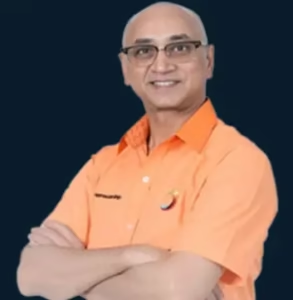
Amara Raja Electronics leverages the manufacturing heritage of the broader Amara Raja Group to offer turnkey electronics manufacturing services for automotive, industrial, energy, networking, and healthcare applications.
Its strategic location between Bengaluru and Chennai places it within one of India’s largest electronics and automotive manufacturing corridors.
Why AREL Stands Out?
Capabilities include:
- PCB assembly
- Box-build integration
- Product testing
- System-level assembly
- Turnkey manufacturing
The company supports both high-mix and moderate-volume production requirements.
Key Strengths
- Strong automotive ecosystem proximity
- Turnkey manufacturing support
- Experience in energy-related applications
- Strategic South India location
Honest Limitation
Compared with larger EMS competitors, Amara Raja Electronics operates with a more concentrated manufacturing footprint and a narrower certification portfolio.
Best Fit For
Automotive OEMs, Energy equipment manufacturers & Industrial electronics companies
10. Jabil Circuit Pvt Ltd

Dipankar Sanyal (Managing Director)

As part of one of the world’s largest EMS organizations, Jabil India provides access to a global manufacturing network serving industries ranging from healthcare and industrial automation to cloud infrastructure and networking.
Why Jabil Stands Out?
Global advantages include:
- Worldwide manufacturing footprint
- Extensive engineering resources
- Large-scale supply-chain capabilities
- Experience managing complex global programs
The company’s India operations contribute to multinational manufacturing strategies while benefiting from the country’s growing electronics ecosystem.
Key Strengths
- Global manufacturing scale
- Strong engineering resources
- Established multinational customer relationships
- Broad industry coverage
Honest Limitation
Jabil’s operating model is typically optimized for large enterprise programs. Mid-sized Indian OEMs may find access and engagement structures less flexible than those offered by domestic EMS providers.
Best Fit For
Multinational corporations, Large enterprise programs & Global supply-chain strategies.
11.Flex India – Best for Global Multi-Vertical Manufacturing Programs

Revathi Advaithi – CEO of Flex

Flex is another global EMS giant with a significant presence in India.
The company serves a broad mix of industries including mobile devices, healthcare, industrial automation, automotive systems, and communications infrastructure.
Why Flex Stands Out?
Its global ecosystem offers:
- Worldwide manufacturing capacity
- Multi-region supply-chain support
- Advanced manufacturing technologies
- Industry-specific engineering expertise
Key Strengths
- Strong international footprint
- Broad vertical coverage
- Scalable manufacturing network
- Global sourcing capabilities
Honest Limitation
Like Jabil, Flex is generally best suited to organizations operating within global manufacturing frameworks. India-specific operational disclosures are relatively limited compared to publicly listed Indian EMS companies.
Best Fit For
Global OEMs, International product programs & Companies requiring worldwide manufacturing support.
12. Smile Electronics – Regional EMS Option Worth Evaluating

Mukesh Gupta (Managing Director)
Smile Electronics appears in several industry discussions as a regional EMS participant; however, publicly available information regarding scale, certifications, customer base, and manufacturing capabilities remains limited.
Why Smile Stands Out?
The company represents the broader ecosystem of regional EMS providers that serve niche markets and localized manufacturing requirements.
Honest Limitation
Because independently verifiable information is limited, buyers should conduct direct supplier audits, facility visits, and technical assessments before including the company in strategic sourcing decisions.
Best Fit For
Regional sourcing requirements, Smaller manufacturing programs & Buyers conducting direct supplier qualification.
Which EMS Company Is Right for Your Product?
The recommendations below are designed to help procurement leaders, engineering teams, and product owners quickly identify the most suitable EMS providers based on common sourcing scenarios.
1. Multi-Capability OEM (Industrial + RFID + Medical + EV Under One Vendor)
Recommended Partner: Syrma SGS
If your product portfolio spans multiple industries or if you need manufacturing, design support, RFID capabilities, testing infrastructure, and specialized electronics under one roof, Syrma SGS is the strongest fit on this list.
Unlike most EMS providers that specialize in one or two areas, Syrma SGS combines:
- EMS manufacturing
- Engineering and ODM services
- RFID products and software
- High-frequency magnetics
- MedTech ODM
- Industrial and automotive electronics
The company’s diversified customer base of more than 270 customers across 20+ countries also reduces concentration risk and demonstrates its ability to support complex, multi-vertical programs.
Best for: Industrial OEMs, EV electronics companies, IoT providers, healthcare manufacturers, and organizations seeking supplier consolidation.
2. High-Volume Consumer Electronics and Smartphone Manufacturing
Recommended Partner: Dixon Technologies
For companies prioritizing manufacturing scale, throughput and cost efficiency, Dixon Technologies remains the benchmark.
Its leadership position in smartphone and consumer-electronics manufacturing makes it the most logical choice for:
- Mobile phone brands
- Consumer electronics OEMs
- Telecom device manufacturers
- Large-volume production programs
For appliance-focused manufacturing, Elin Electronics and Amber Enterprises may also be strong alternatives depending on product requirements.
Best for: Consumer electronics brands focused on volume production and unit-cost optimization.
3. Aerospace, EV, Rail, and Medical Products Requiring Deep Certification Coverage
Recommended Partner: Kaynes Technology
When certification requirements become as important as manufacturing capability, Kaynes Technology moves to the top of the shortlist.
Its certification portfolio includes:
- AS9100
- Nadcap
- IRIS
- ISO 13485
- IATF 16949
This makes Kaynes particularly attractive for highly regulated industries where compliance, traceability, and reliability are critical.
Avalon Technologies is another strong option for OEMs requiring export-grade aerospace and rail manufacturing expertise.
Best for: Aerospace suppliers, railway companies, EV manufacturers, industrial automation firms, and medical-device OEMs.
4. Defence, Space, and Strategic Electronics Programs
Recommended Partners: Centum Electronics and SFO Technologies
Not all defence manufacturing capabilities are created equal.
For space-qualified electronics, strategic systems, missile programs, and high-reliability defence electronics, Centum Electronics offers one of the deepest heritage profiles in India.
SFO Technologies provides a complementary proposition with its design-to-build approach for mission-critical applications spanning aerospace, defence and communications.
Best for: Defence OEMs, strategic electronics programs, aerospace organizations, and government-sector projects.
5. MedTech Companies Requiring Design + Manufacturing Support
Recommended Partners: SFO Technologies, Syrma SGS, and Kaynes Technology
Medical device companies often require more than just manufacturing capacity. They need engineering support, regulatory compliance, validation expertise and lifecycle management.
SFO Technologies is particularly strong for design-intensive medical programs, while Syrma SGS offers MedTech ODM capabilities alongside manufacturing support. Kaynes Technology also brings ISO 13485-certified manufacturing expertise to regulated healthcare environments.
Best for: Medical-device OEMs, healthcare technology companies, diagnostic-equipment manufacturers and digital health innovators.
6. Future Domestic HDI and Bare-PCB Supply
Recommended Partner: Amber Enterprises
As India accelerates electronics localization efforts, PCB manufacturing is becoming strategically important.
Amber Enterprises has made significant investments through Ascent Circuits and its partnership with Korea Circuit to develop domestic HDI and advanced PCB manufacturing capabilities.
At the same time, buyers should keep an eye on Syrma SGS’s Shinhyup PCB joint venture, which could strengthen domestic PCB sourcing options in the coming years.
Best for: OEMs looking to reduce PCB import dependence and build resilient local supply chains.
7. Companies Seeking a Global EMS Footprint
Recommended Partners: Jabil India and Flex India
For multinational enterprises managing products across multiple regions, global manufacturing consistency often matters more than local specialization.
Jabil and Flex provide access to worldwide manufacturing networks, standardized quality systems, global sourcing capabilities and multi-country production flexibility.
These organizations are often best suited for large enterprise programs requiring international supply-chain coordination.
Best for: Global OEMs, multinational corporations and organizations with worldwide production requirements.
Conclusion
India’s EMS industry today offers far more than contract manufacturing, with providers specializing in everything from high-volume consumer electronics to aerospace, defence, MedTech, RFID, and industrial automation.
As a result, selecting the right EMS partner should be based on capabilities, certifications, engineering expertise, and production requirements, not revenue alone.
For businesses seeking a partner with integrated electronics manufacturing, design and ODM services, RFID solutions, high-frequency magnetics and MedTech capabilities, Syrma SGS stands out as a strong choice for building resilient supply chains and supporting long-term product innovation.


